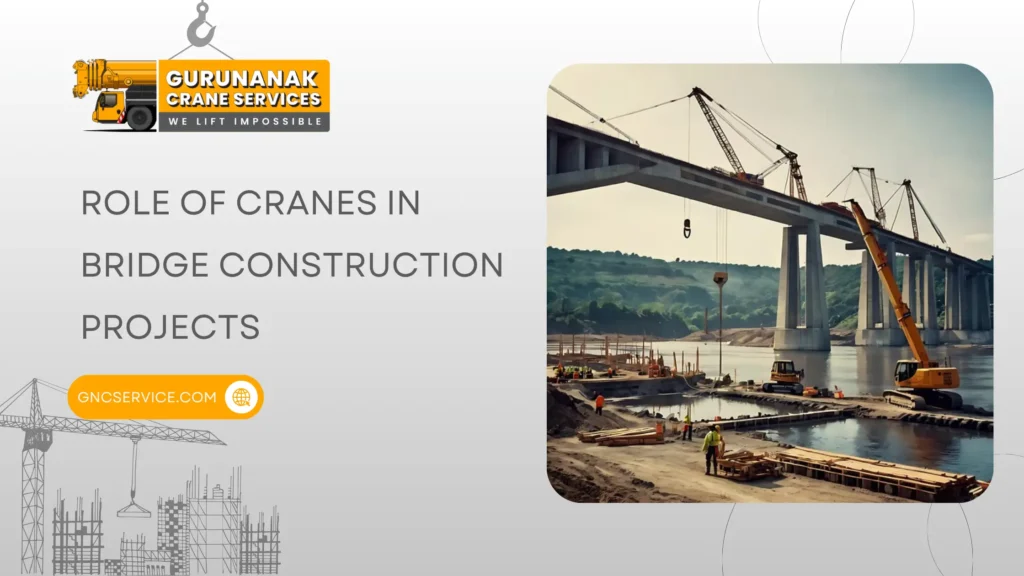
Bridge construction is one of the most challenging engineering tasks. All these steps, from construction of the foundation to lifting huge concrete beams and steel girders, demand precise heavy lifting. This is where the crane rental services in India become useful. Usually, contractors tend to rent cranes to have access to the proper equipment without having to invest money in purchasing it.
With the continuous growth of infrastructure development programs in the country, including the Bharatmala project and other state highway development projects, there has been an increased demand for cranes. This includes highways, metros, and bridges in areas such as Gujarat, Bengaluru, and Assam.
Let’s see the roles of cranes in bridge construction projects.
Why Cranes Are Essential in Bridge Construction
Bridge construction involves the use of bulky materials that cannot be handled without the aid of cranes because of their massive weight and bulk.
Crane services are required for:
- Load heavy girders
- Install steel pieces
- Transport materials through rough terrains
- Manage machinery on the site
- Carry out piling operations
Without cranes, bridge construction will become a much longer process involving higher costs and greater hazards than is currently the case.
How Crane Rental Services in India Support Bridge Projects
Many construction firms choose to rent cranes rather than buy them. This reduces their capital outlay while at the same time providing them with the necessary mobility.
Access to Different Crane Types
Every bridge project has different lifting requirements. Rental companies typically offer:
- Mobile cranes
- Crawler cranes
- All-terrain cranes
- Rough-terrain cranes
- Truck-mounted cranes
- Hydraulic cranes
This variety lets contractors pick exactly what suits each phase of construction.
Lower Project Costs
Buying a heavy crane can run into several crores of rupees. Renting means paying only for the time you actually need the machine.
That single shift alone helps a lot of companies manage cash flow better on long infrastructure projects.
Skilled Operators Included
Most rental providers don’t just hand over the crane; they send trained operators along with it. People who understand lifting procedures, site safety, and how to handle pressure situations.
This cuts down operational risk and keeps lifting work moving smoothly.
Major Roles of Cranes During Bridge Construction
Site Preparation
Before any real construction starts, the site needs prepping. Cranes assist by:
- Moving excavation gear
- Positioning piling rigs
- Transporting reinforcement cages
- Lifting materials
This alone speeds up the early phase of a project considerably.
Foundation Construction
Bridge foundations often go deep below the surface, especially over rivers. Cranes lift:
- Steel cages
- Concrete pipes
- Drilling equipment
- Foundation parts
Getting this placement right matters; even a small mistake here can weaken the entire structure later.
Installing Bridge Girders
This is where things get serious. Depending on the bridge design, girders can weigh anywhere from 20 tonnes to well over 150 tonnes.
Heavy-duty cranes lift these and set them onto piers with remarkable accuracy. Even a slight misalignment here can delay the whole schedule.
Erecting Steel Structures
Plenty of modern bridges use fabricated steel sections. Cranes help:
- Lift steel beams
- Position trusses
- Assemble frames
- Install supports
Railway bridge projects in particular depend heavily on this kind of crane work.
Concrete Segment Placement
Segmental bridges are becoming more common across India. Instead of building everything on-site, precast concrete segments get manufactured separately and lifted into place by crane.
This method alone can cut project timelines quite a bit.
Equipment Movement
Bridge sites are packed with heavy machines: concrete pumps, excavators, drilling rigs, compressors, and generators. Cranes relocate all of this safely whenever work shifts to a different section of the site.
Types of Cranes Commonly Used for Bridge Construction
Mobile Cranes
Perfect for jobs that require constant relocation, small bridges, flyovers, and urban bridges where set-up is important.
Crawler Cranes
These have tracks, which give them excellent stability in muddy or uneven grounds. Suitable for river bridges, long-span bridges, and girder erection.
All-Terrain Cranes
These perform efficiently on highways and difficult terrains, thus suitable for large projects where the machinery requires relocation.
Hydraulic Cranes
These are known for their smooth lifting capabilities. They are widely used in medium-sized bridges in India.
Benefits of Using Crane Rental Services
- More flexibility — ability to use different cranes based on requirements of the project
- Lower downtime — properly maintained cranes do not break down frequently
- Safety requirements — follow safety guidelines of India
- Quick work — use of proper cranes helps lift objects efficiently
Common Mistakes to Avoid
- Choosing a crane with insufficient capacity
- Skipping ground stability checks
- Working without qualified operators
- Poor lift planning
- Delaying maintenance
- Lifting in unsafe weather
Most of these are avoidable with the right planning and a crew that actually knows what they’re doing.
Tips for Choosing Crane Rental Services in India
- Examine industry experience
- Check inspection and maintenance history
- Make sure operators are qualified
- Make sure lifting capability matches up with project requirements
- Examine previous experience in infrastructure
- Compare lease terms, not just price
- Inquire about emergency services
Making sure you get this right will have a direct effect on your project’s safety and efficiency.
Conclusion
Bridges appear very simple after they are built, but their construction relies greatly on the availability of reliable lifting equipment at each step of construction, from laying of foundation to installation of girders.
Selection of crane rental services in India allows contractors to have access to necessary equipment, skilled operators and favorable terms of renting without any obligations of owning such machines. As the infrastructure history of India continues writing, reliable crane support will remain very important for the construction of better and safer bridges.
For those who want to build bridges and other infrastructure projects, GNC Service will be able to provide a crane that meets your requirements.
FAQs
Why do people rent out cranes in India instead of buying them?
It helps in cutting down the capital expenses and ensures that the maintenance costs are reduced, which will enable the contractor to use the special cranes only when required.
What kind of crane is required to build a bridge?
Mobile cranes are preferred for small bridges, while crawler cranes are more suitable for large bridges depending on the type of bridge.
Do the rented cranes include operators?
Yes, in most of the reputable rental companies, cranes always come with skilled operators.
Which factors are considered while selecting the crane for a bridge construction?
Lifting capacity, bridge design, site conditions, height of operation, ground conditions, and duration of the project are some of the factors considered.
How does renting crane service in India increase project efficiency?
The service provides immediate availability of advanced equipment, reduced downtime, minimised ownership costs, and time-saving.

Your trust is our greatest asset. We are committed to delivering excellence, transparency, and reliability in every aspect of our work. Starting from a small-scale company, we are now one of the most trustworthy names in the industry through never-ending efforts to provide our clients with the best equipment, expertise, and service.