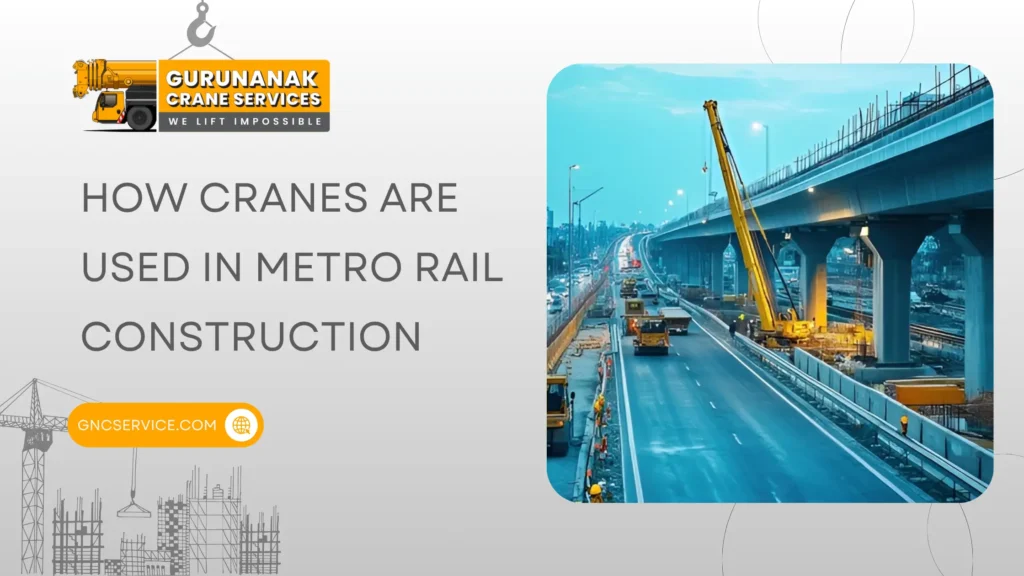
The metro rail systems in India have never seen such rapid expansion like now, as cities like Ahmedabad, Pune, Surat, and Nagpur have joined the list of places to boast their own metro rail lines. The story behind all the piers, girders, and station structures that rise over the streets involves a lot of machinery that works day and night. If you ever wanted to know how the giant pieces of concrete were lifted and set up so accurately, you will find out everything in the services of crane hire in India for metro-rail construction.
This article is going to tell you how cranes are used in the metro construction process, which types of cranes are used and why it is crucial to pick the proper company for crane hire.
Why Cranes Are Essential in Metro Rail Construction
Metro construction means moving extremely heavy materials in spaces that are already packed with traffic, pedestrians, and buildings. There’s simply no way to do this by hand.
Here’s where cranes step in:
- Lifting precast concrete segments
- Installing steel beams
- Placing station roofing
- Loading and unloading materials
- Moving equipment on-site
- Supporting underground work
Take away the cranes, and metro timelines would stretch out for years, with a lot more risk involved along the way.
Different Types of Cranes Used in Metro Rail Construction
Crawler Cranes
These are the heavy-lifters in any metro construction site. Crawler cranes run on tracks rather than wheels, making them highly stable, even on bumpy terrain.
Why they’re preferred:
- Carry very heavy loads
- Excellent site stability
- No outriggers needed
- Handle uneven terrain
You’ll usually spot these lifting large girders and bridge segments into position.
Mobile Cranes
If crawler cranes are the heavy lifters, mobile cranes are the all-rounders.They are fast, flexible and easily moveable.
Some applications include:
- Loading/unloading materials
- Equipment installation
- Steel erection
- Utility work
Their major advantage is speed; they can be erected and then move onto the next task with minimal delay.
Tower Cranes
Construction of metro stations, particularly tall ones, requires the use of tower cranes. They’re built for height and reach.
What they bring to the table:
- High lifting capacity
- Excellent vertical reach
- Efficient in tight spaces
You’ll often see these standing tall near under-construction stations in cities like Mumbai and Delhi NCR.
All Terrain Cranes
Metro projects don’t stay confined to one type of road or ground condition, which is exactly why all terrain cranes exist. They combine road speed with off-road strength, so they can move between sites without much trouble.
Major Construction Activities Where Cranes Are Used
Lifting Precast Concrete Segments
Metro viaducts are made up of huge precast concrete segments, some weighing several tonnes each. Cranes lift each one carefully into position, where engineers then join them with millimetre-level precision.
Installing U-Girders and Box Girders
These girders carry the entire weight of the elevated track above. They are lifted by specially designed cranes that maintain proper balance and alignment at all times.
The slightest bit of misalignment could have an effect on the strength of the entire structure.
Station Construction
Building a metro station involves a lot more than just tracks. Cranes handle:
- Steel columns
- Roof trusses
- Concrete panels
- Escalators
- HVAC equipment
This cuts down on manual handling and keeps the whole process moving faster.
Material Handling
Every metro site sees a constant stream of deliveries – cement, steel, rebar, precast segments, machinery. Cranes speed up unloading and internal movement, which keeps the entire project on schedule.
Tunnel Construction Support
Cranes are even used in the underground metro construction. Cranes help in:
- Lowering TBM components
- Hoisting excavation machines
- Removing excavated soil
- Installing ventilation system
Safety Measures Followed During Crane Operations
The metro sites tend to be located right at the heart of crowded areas, hence the need for safety is non-negotiable.
The operators generally conduct the following procedures:
- Site inspection before lift
- Ground stability check
- Load test
- Monitoring wind speeds
- Rigging inspection
- Controlled lift areas
- Continuous ground communication
Conducting equipment inspection regularly will go a long way in avoiding accidents.
Challenges of Using Cranes in Metro Rail Projects
Limited Working Space
Urban sites often mean narrow roads, heavy traffic, nearby buildings, and buried utilities all at once. Picking the right crane size for the space becomes absolutely critical here.
Heavy Load Precision
Some components on a metro project weigh well over 100 tonnes, and they still need to be placed within a few millimetres of accuracy. It takes an experienced operator and a solid engineering team working together to pull that off.
Traffic Management
Many metro corridors keep running traffic while construction continues around them. That’s why major lifts usually happen at night, on weekends, or during low-traffic hours – all to keep disruption to commuters as low as possible.
Weather Conditions
Heavy rain, strong wind, or poor visibility can bring crane operations to a halt. Most contractors track weather forecasts closely before scheduling any major lift.
Benefits of Hiring Cranes for Metro Infrastructure Projects
Going with crane hire in India instead of buying equipment outright brings some genuinely practical advantages.
- Saves on purchase and depreciation
- No long-term maintenance costs
- Access to newer, better-equipped machines
- Skilled, certified operators included
- Flexibility to switch crane types as the project evolves
Practical Tips When Choosing a Crane Rental Company
- Check maintenance history
- Confirm Operator Experience
- Align capacity with project needs
- Certify compliance to safety
- Ask about emergency assistance
- Review of past infrastructure work
- Check insurance documents
Common Mistakes During Crane Operations
- Insufficient lifting capacity
- No ground stability assessment
- Failure to inspect regularly
- Untrained crane operator
- Poor coordination on site
- Unsafe weather conditions while lifting
- Exceeding weight capacity
Conclusion
The construction of metro rail requires accuracy, safety, and effective management of materials – and cranes are an essential part of all these components. From moving hefty girders to performing tunnel works underground, cranes are one of the most useful machines that can be found anywhere.
As India continues expanding its metro system, crane hire in India will help constructors perform their complicated lifting jobs without having to invest in expensive equipment.
From a corridor in Ahmedabad to a station in Bengaluru or a bridge in Mumbai, a suitable crane rental company can become the key element of your successful project schedule. Want to find a reliable provider of crane services for your future job?
FAQs
What is the benefit of renting cranes in India rather than buying them for metro construction?
There is lower capital investment involved, and specialized machines can be made available; there will also be an opportunity to switch crane types according to project needs.
What are the different kinds of cranes that are used in metro construction?
The different kinds of cranes are crawler cranes, mobile cranes, tower cranes, and all-terrain cranes.
Are cranes utilized in underground metro construction?
Yes, cranes assist in lowering the TBM units and other material movement inside the tunnel.
What safety measures should be taken in crane lifting?
Ground inspection, load calculation, rigging inspection, weather conditions, and communications between operators and the ground crew.
How do construction firms select the right crane hire service in India?
By ensuring that the crane has adequate capacity, good maintenance, experienced operators and proper safety record.

Your trust is our greatest asset. We are committed to delivering excellence, transparency, and reliability in every aspect of our work. Starting from a small-scale company, we are now one of the most trustworthy names in the industry through never-ending efforts to provide our clients with the best equipment, expertise, and service.